




 TECHNICAL REFERENCE
What Is Digital Distortion in Audio?
Digital distortion occurs when a digital audio system or process alters a signal in an unwanted way. Common causes include clipping, quantisation errors, aliasing, excessive processing levels, and limitations in digital conversion. This article explores various types of digital distortion in audio.
Introduction
Digital distortion is an unwanted change to an audio signal that occurs when digital audio equipment cannot accurately represent, process, or reproduce the original sound. It can make music, speech, or other recordings sound harsh, gritty, clipped, noisy, or unnatural.
Unlike some forms of analogue distortion that can sometimes be used creatively, digital distortion is often associated with technical problems such as clipping, excessive signal levels, insufficient resolution, or errors during digital processing.
How Digital Audio Works
To understand digital distortion, it helps to understand how sound becomes digital.
Sound is naturally an analogue phenomenon. A microphone converts changes in air pressure into an electrical signal. When this signal is recorded digitally, an analogue-to-digital converter (ADC) measures the signal many times per second and converts each measurement into a numerical value.
Two important factors determine the quality of this process:
- Sample rate – how many times per second the audio signal is measured.
- Bit depth – how precisely each measurement can represent the signal's amplitude.
For example, CD-quality audio uses a sample rate of 44.1 kHz and a bit depth of 16 bits.
When the digital system has enough range and resolution, the original waveform can be represented very accurately. Problems occur when the signal exceeds the system's limits or when digital processing introduces errors.
Digital Clipping
One of the most common forms of digital distortion is clipping.
Every digital audio system has a maximum level that it can represent. In typical digital audio systems, this maximum is represented by 0 dBFS (decibels relative to full scale).
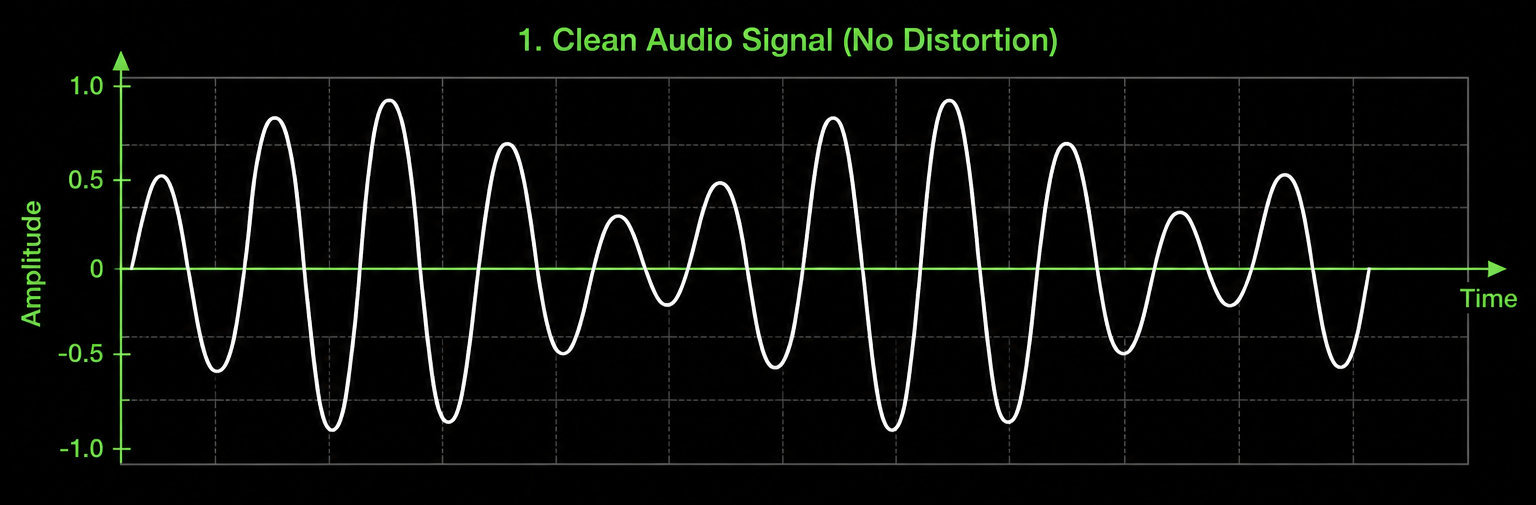
If an audio signal attempts to go above this maximum, the system cannot represent the additional level. The peaks of the waveform are therefore cut off.
Instead of a smooth waveform such as:
the waveform may become more like:
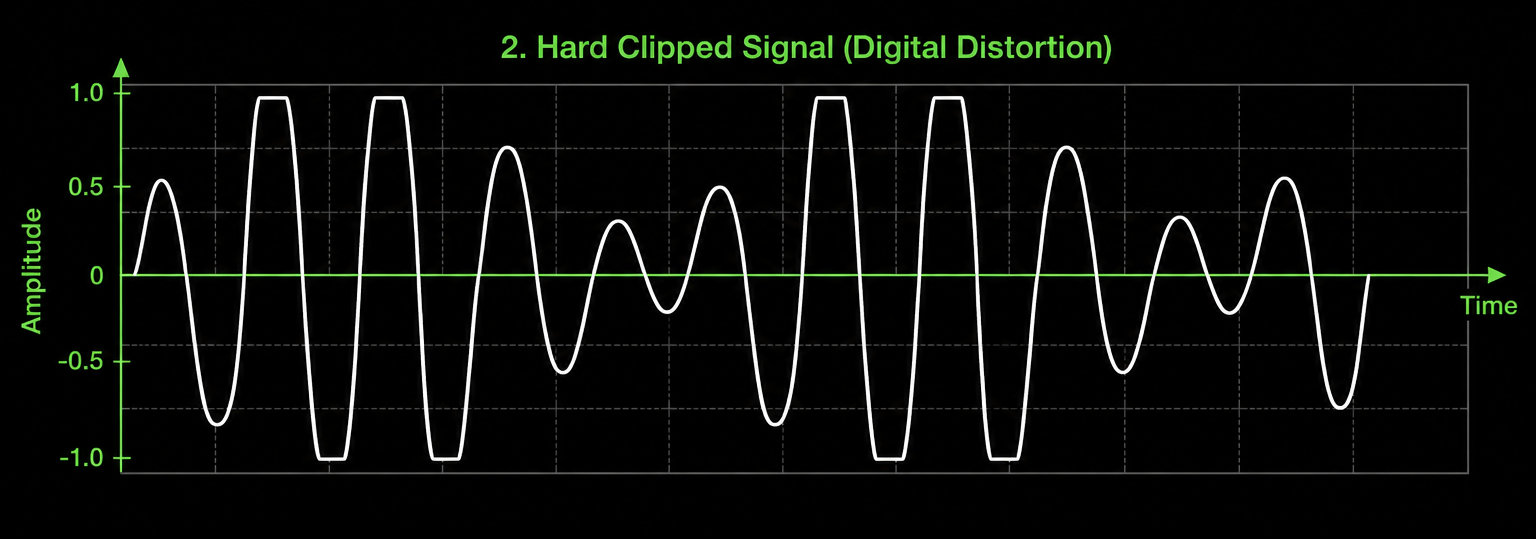
This changes the shape of the waveform and introduces additional harmonic content. The result can sound harsh, crunchy, or distorted.
Digital clipping can happen while recording, mixing, mastering, or playing back audio.
What does Digital Distortion Sound Like?
Digital distortion can have several different characteristics depending on its cause.
Common symptoms include:
- Harsh or brittle sound
- Crackling or buzzing
- Flattened or clipped transients
- Loss of clarity
- Gritty vocals
- Distorted bass or drums
- A "digital" or unnatural character
- Sudden clicks or pops
Severe clipping is usually easy to hear, while subtle digital distortion may only become noticeable when listening carefully or using headphones.
The Difference between Analogue and Digital Distortion
Analogue and digital distortion are not necessarily the same.
Analogue equipment can distort when its circuits are pushed beyond their intended operating range. Devices such as guitar amplifiers, tape machines, valves, and analogue consoles can produce forms of distortion that many musicians deliberately use because they can add warmth, colour, or character.
Digital clipping, on the other hand, occurs when a digital system reaches its numerical limit. It generally produces a much more abrupt form of distortion.
This is why engineers often describe analogue saturation as potentially musical, while uncontrolled digital clipping is usually something to avoid.
Bit Depth and Quantisation Distortion
Another source of digital distortion is quantisation.
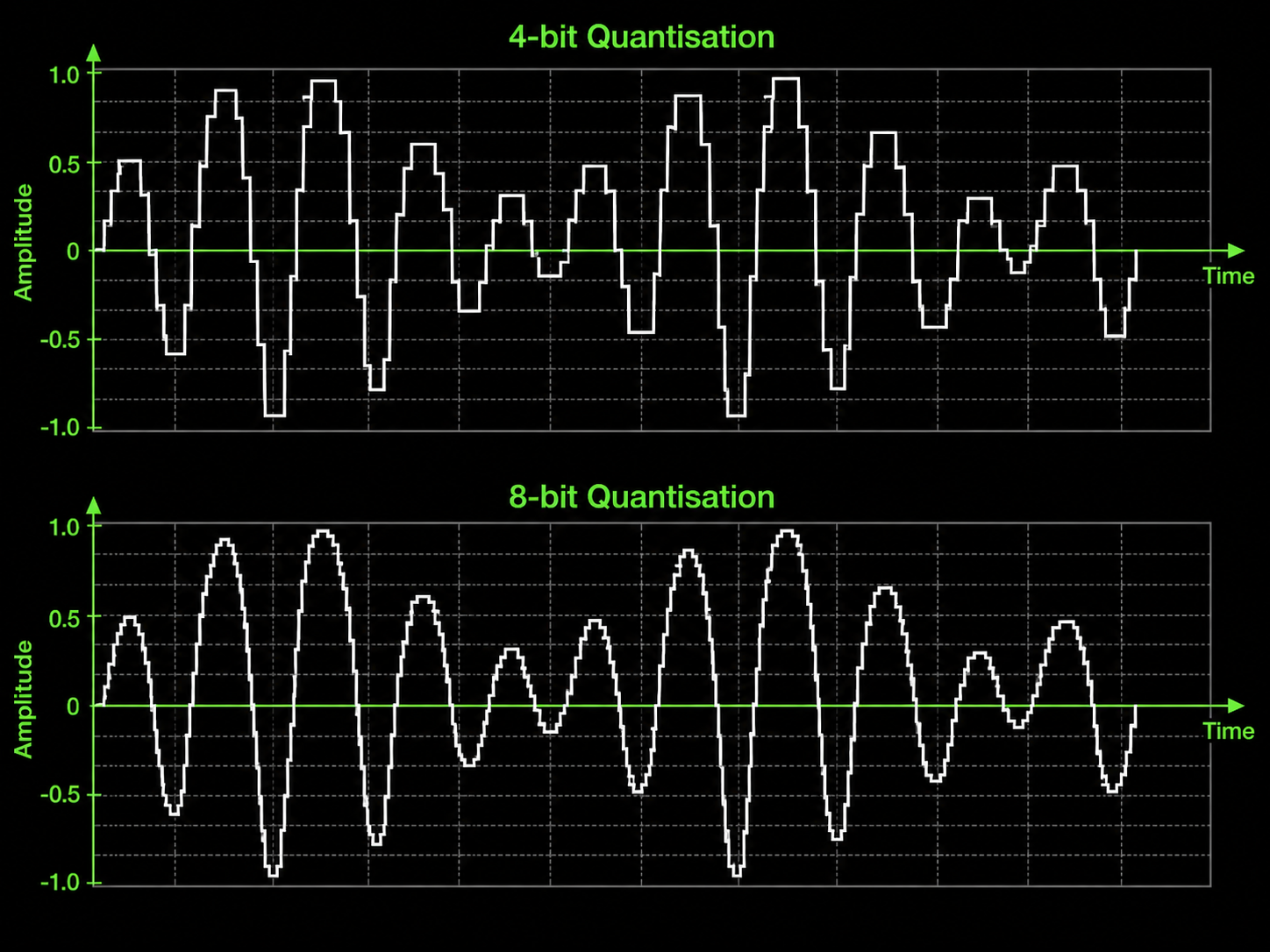
When an analogue signal is converted into digital values, the system has a finite number of possible amplitude levels. Bit depth determines how many levels are available.
A higher bit depth provides more possible values and allows the system to represent small changes in amplitude more accurately.
For example, 16-bit audio provides 65,536 possible amplitude values, while 24-bit audio provides many millions of possible values.
The difference between the original signal and the nearest available digital value is known as quantization error. At low bit depths or very low signal levels, this error can become audible as noise or distortion.
Sample Rate and Aliasing
Digital distortion can also be related to the sample rate.
According to the Nyquist-Shannon sampling principle, a digital system needs to sample a signal at more than twice its highest frequency in order to represent that frequency correctly.
If frequencies above the system's usable range are not properly filtered, they can produce aliasing.
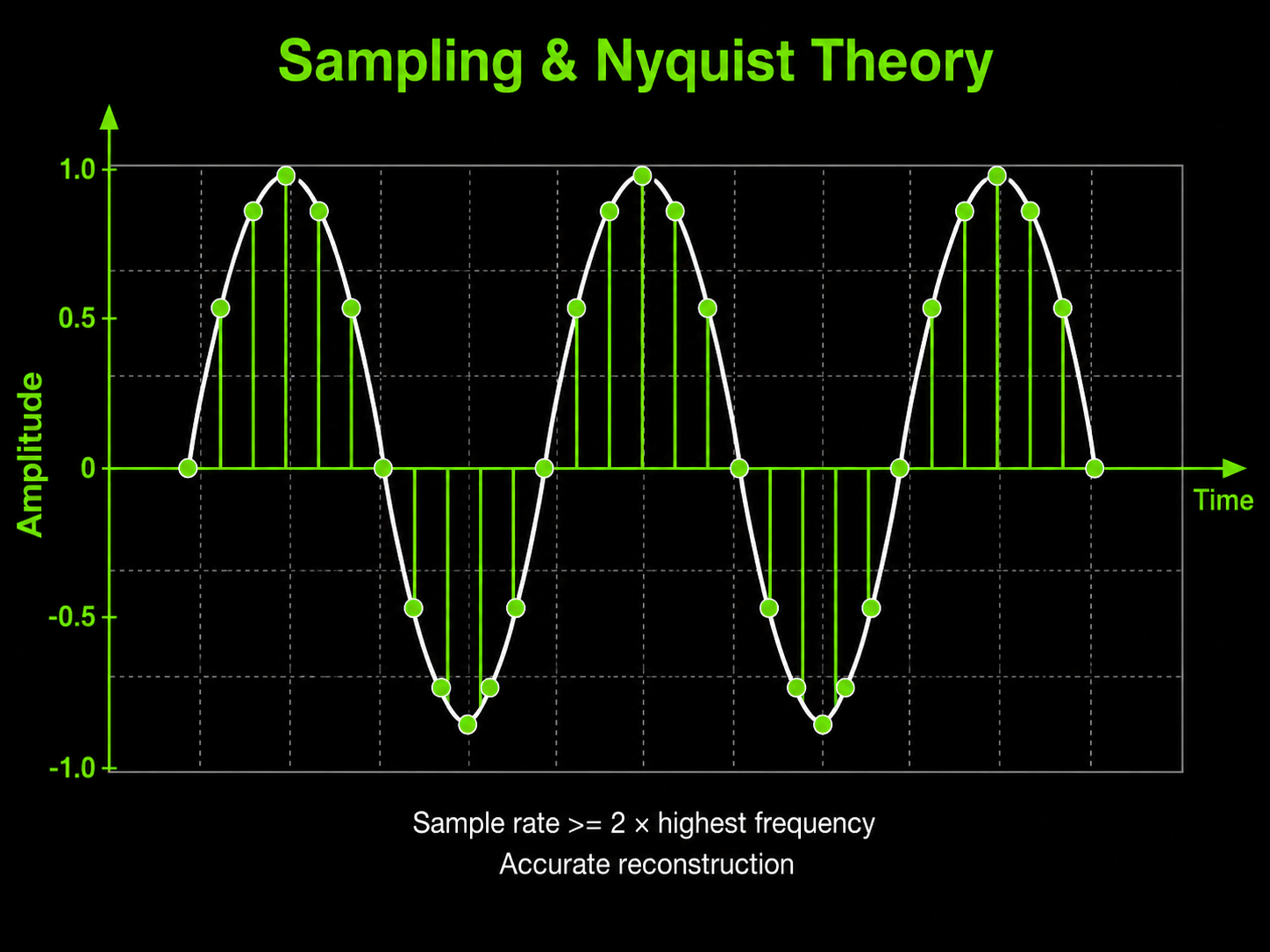
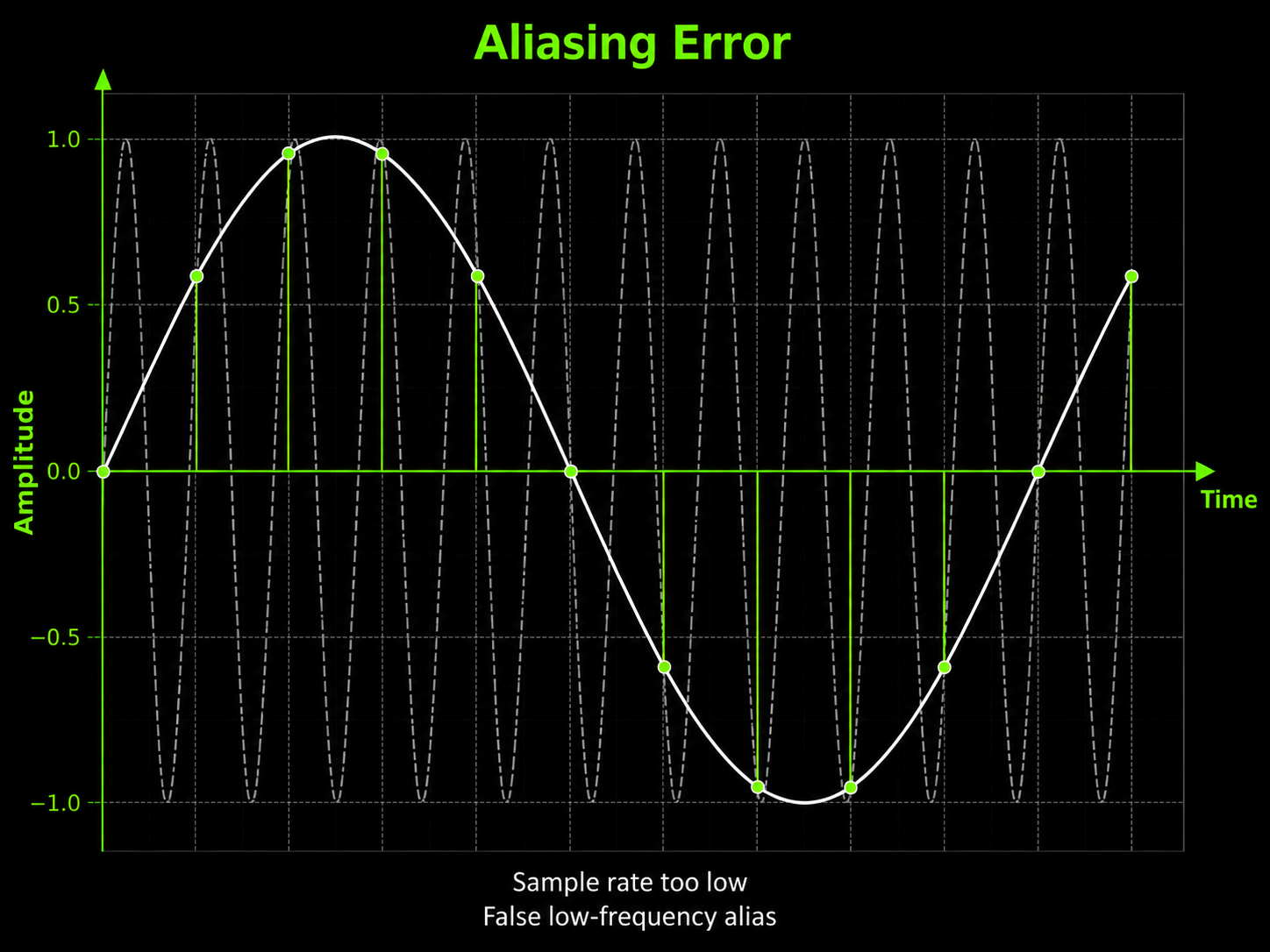
Aliasing creates unwanted frequencies that were not present in the original signal.
Aliasing can be particularly noticeable in digital synthesisers, distortion plug-ins, sample-rate conversion, and other forms of digital audio processing.
Modern audio software often uses techniques such as oversampling and anti-aliasing filters to reduce these unwanted artefacts.
Digital Distortion during Recording
Digital distortion can occur before the audio is even recorded.
For example, if a singer performs loudly and the microphone preamp or audio interface is set too high, the input signal can overload the converter.
Once the ADC clips, lowering the volume afterwards will not restore the original waveform. The distortion has already been recorded into the audio.
This is why recording engineers normally leave some headroom between the average recording level and 0 dBFS.
Digital Distortion during Mixing
Distortion can also occur inside a digital audio workstation (DAW).
Modern DAWs generally provide substantial internal processing headroom, but individual plug-ins, virtual instruments, effects, or output stages may still overload.
For example, a chain of several plug-ins can progressively increase the signal level. Even if the original recording was clean, the signal can eventually become too loud for a particular processor or output stage.
Monitoring the level at different points in the signal chain can help identify where the distortion is being introduced.
How to Prevent Digital Distortion
There are several ways to reduce unwanted digital distortion:
1. Leave Enough Headroom
Avoid recording signals extremely close to 0 dBFS. Leaving headroom gives unexpected peaks room to occur without clipping.
2. Watch Your Meters
Keep an eye on input, channel, plug-in, and master output meters. A signal can overload at one point in a chain even if another meter looks safe.
3. Avoid Excessive Gain
If several plug-ins are adding gain, reduce the output level of earlier stages rather than allowing the signal to become unnecessarily hot.
4. Use Appropriate Sample Rates
Choose a sample rate appropriate for the project and make sure sample-rate conversion is performed correctly.
5. Use Oversampling When Appropriate
Some plug-ins, particularly distortion, saturation, and nonlinear processing plug-ins, can generate aliasing. Oversampling can reduce these artefacts.
6. Fix Clipping after the Fact
Clipped recordings may sometimes be repaired or at least improved with specialised restoration software like CEDAR Declip 2.
Prevention is key. Once information has been lost through severe digital clipping, it cannot always be perfectly recovered.
Can Digital Distortion be used creatively?
Yes. Digital distortion is not always a mistake.
Producers and sound designers sometimes deliberately use digital clipping, bit reduction, sample-rate reduction, and other forms of digital processing to create aggressive or unusual sounds.
These effects can be useful in:
- Electronic music
- Industrial music
- Sound design
- Video games
- Film effects
- Experimental music
- Lo-fi production
The important distinction is intent. If distortion is deliberately introduced as an effect, it can become part of the sound. If it happens accidentally because a recording or processor has been overloaded, it is usually considered a technical problem.
Conclusion
Digital distortion occurs when a digital audio system or process alters a signal in an unwanted way. Common causes include clipping, quantisation errors, aliasing, excessive processing levels, and limitations in digital conversion.
Understanding concepts such as bit depth, sample rate, headroom, clipping, and aliasing makes it easier to record and mix clean audio.
Digital distortion is not always bad. When controlled deliberately, it can be a powerful creative tool. However, accidental digital clipping and other unwanted artefacts can permanently damage a recording, so maintaining sensible levels and adequate headroom is one of the most important principles of digital audio production.
Head of Sales
CEDAR Audio Ltd
14 Aug 2026