




 APPLICATION GUIDE
Vocal Compression: The Complete Guide — Types, Controls & Practical Settings
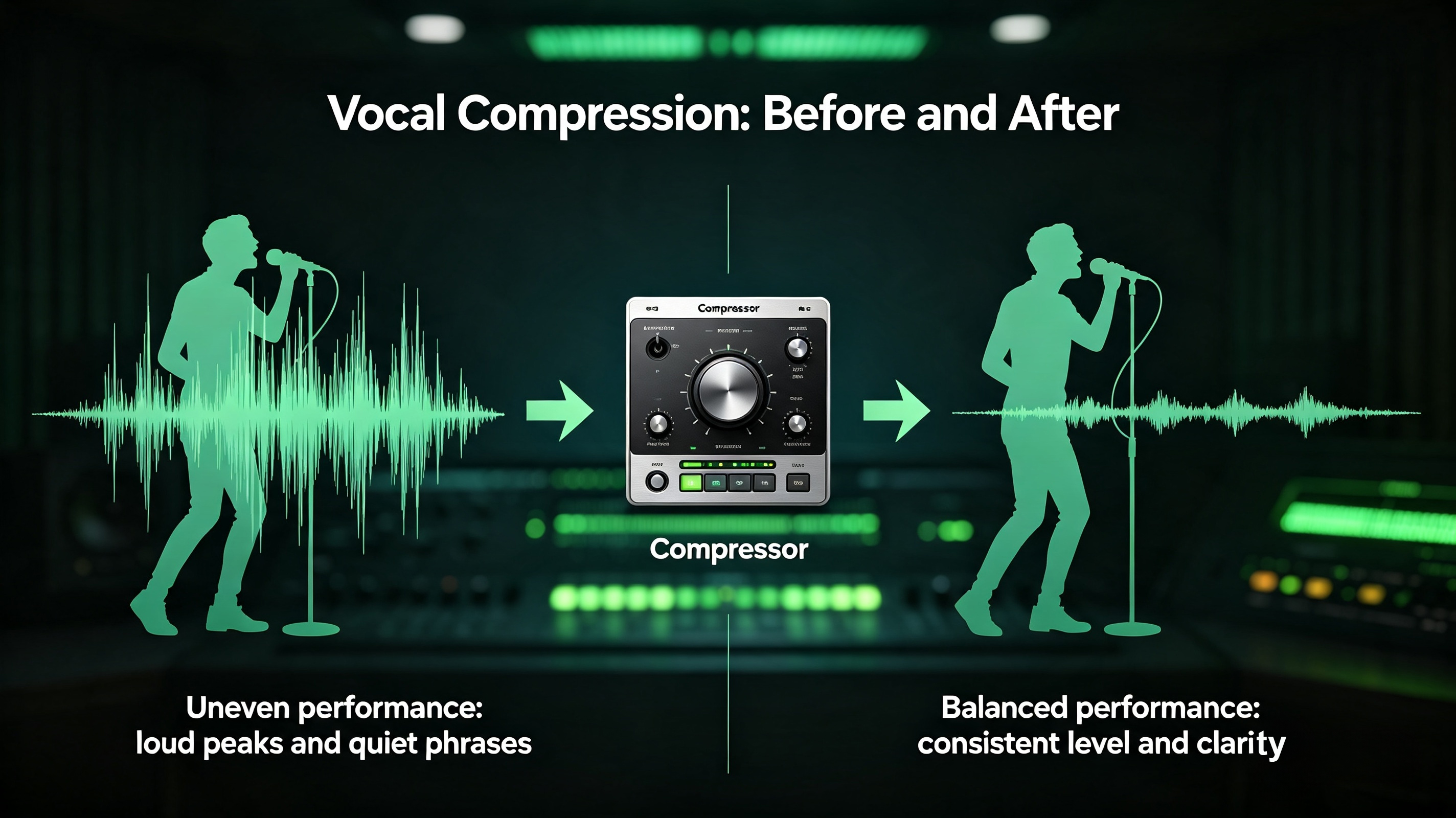
Vocal compression is the art of taming the loudest parts of a vocal performance so the quietest words remain audible. This guide explains exactly how each control works, the four main compressor topologies, why they sound so different on vocals, and exactly when to choose one over another.
Introduction
Vocal compression is the art of taming the loudest parts of a vocal performance so the quietest words remain audible — without losing the emotion and natural dynamics that make a performance feel human. When applied well, compression makes vocals sit solidly in a mix, sound polished and consistent, yet still breathe naturally.
This guide explains exactly how each control works, the four main compressor topologies, why they sound so different on vocals, and exactly when to choose one over another.
Part 1: Understanding the Controls
Every compressor shares a common set of parameters. Here's exactly what each does to your vocal:
THRESHOLD
What it is:
The volume level where compression starts working.
- Everything below passes untouched.
- Everything above gets compressed.
On vocals:
- Lower threshold = more compression across more syllables.
- Higher threshold = only the loudest peaks get tamed.
Starting point:
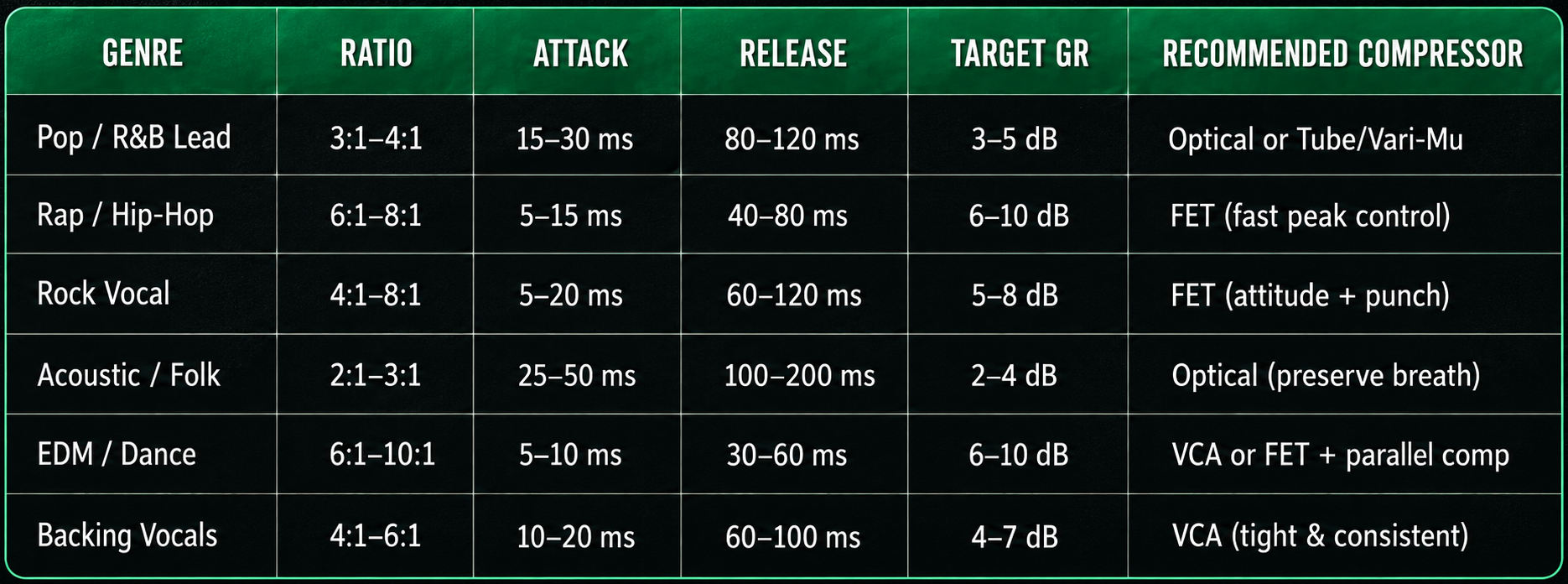
Set so your loudest chorus peaks show 3–6 dB of gain reduction on the meter.
RATIO
What it is:
How aggressively the signal above threshold is squeezed (turned down).
- 2:1 — Gentle. Every 2 dB over threshold → 1 dB out. Very natural.
- 4:1 — Moderate. Every 4 dB over → 1 dB out. The vocal sweet spot.
- 8:1+ — Heavy / limiting. Aggressive, pinned, in-your-face.
On vocals:
Lead vocals usually sound best at 2:1 – 4:1. Rap/EDM often uses 6:1 – 10:1.
ATTACK
What it is:
How fast the compressor clamps down after the signal crosses threshold.
- Fast (1–10 ms): Catches plosives and sharp peaks immediately — but can make vocals sound dull or "squashed."
- Medium/Slow (15–50 ms): Lets the initial consonant and breath through — preserves clarity and articulation.
On vocals:
Start around 15–30 ms. If the vocal sounds flat or lifeless, slow it down further. If it still pokes through, speed it up.
RELEASE
What it is:
How quickly the compressor "lets go" and returns to normal volume after the signal drops.
- Fast (20–50 ms): Tight, but can sound "pumpy" — breathing rhythmically with every word.
- Medium (80–150 ms): Smooth, natural recovery — breathes with the vocal phrase.
- Slow (200 ms+): Glues whole phrases together — can sound flat if overdone.
On vocals:
Start at 100 ms or Auto, then adjust to eliminate pumping.
KNEE
- Hard knee: Compression kicks in instantly when crossing threshold — more aggressive, obvious.
- Soft knee: Compression eases in gradually — gentler, more natural on vocals. Most vintage-style compressors are inherently soft-knee.
MAKEUP GAIN
Compression turns peaks down, so the whole signal gets quieter. Makeup gain turns the overall level back up so you can hear the difference objectively. Always match levels when A/B'ing.
Part 2: The Four Main Compressor Types & Their Vocal Sound
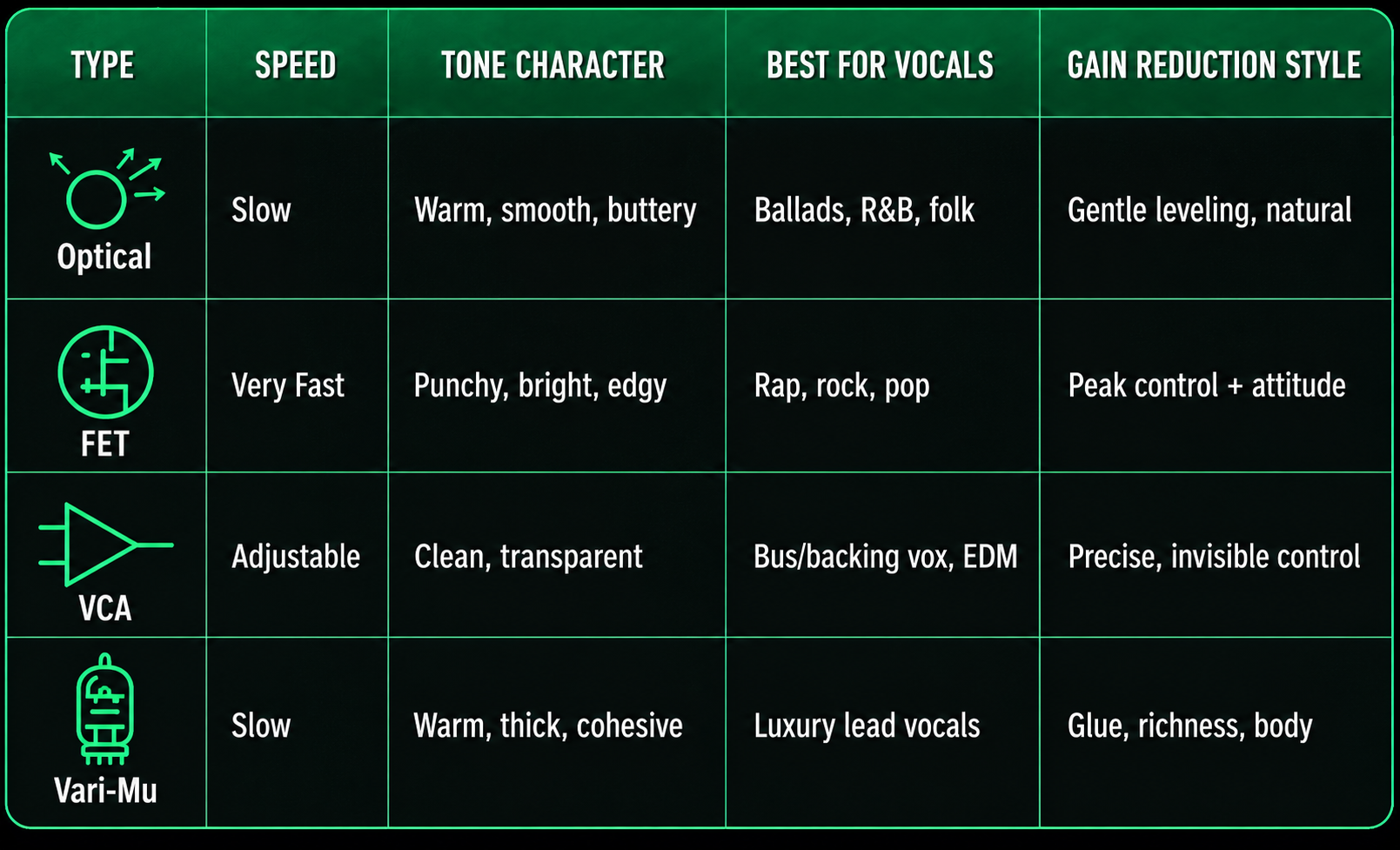
Not all compressors behave the same way. The internal design — the topology — determines speed, tone, and "personality." This is the most important choice you make.
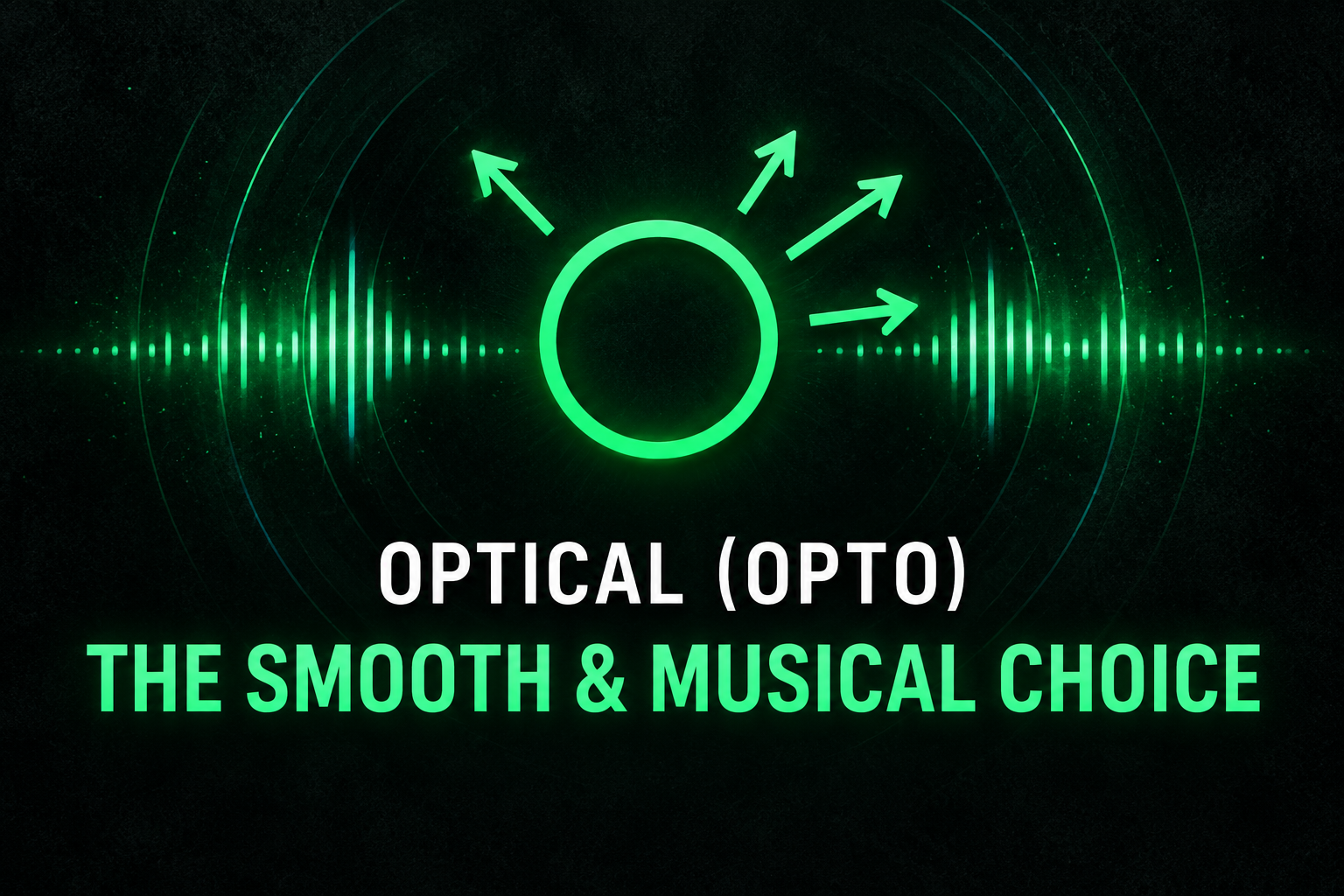
Classic example: Teletronix LA-2A
How it works:
Audio drives a light source; a photocell reacts to brightness. Physics makes it inherently slow and smooth.
Speed:
Moderate attack, slow, program-dependent release.
Vocal character:
Warm, buttery, creamy, forgiving. Adds richness without harshness. "Glues" the vocal gently.
Best for:
Ballads, R&B, soul, folk, intimate vocals. Any vocal where you want natural leveling with warmth.
Why choose it:
You want the vocal to settle comfortably without sounding processed. Opto is the most forgiving vocal compressor.

Classic example: UREI / Universal Audio 1176
How it works:
Uses transistors that switch extremely fast — microseconds. Grabs transients instantly. Adds pleasing harmonic grit.
Speed:
Very fast attack (under 1 ms), fast release. Can catch peaks nothing else can.
Vocal character:
Bright, punchy, forward, "attitude." Adds edge, presence, and aggression. Gets thicker when pushed.
Best for:
Rap, hip-hop, rock, pop — vocals that need to cut through dense mixes. Excellent for taming plosives and sharp consonants.
Why choose it:
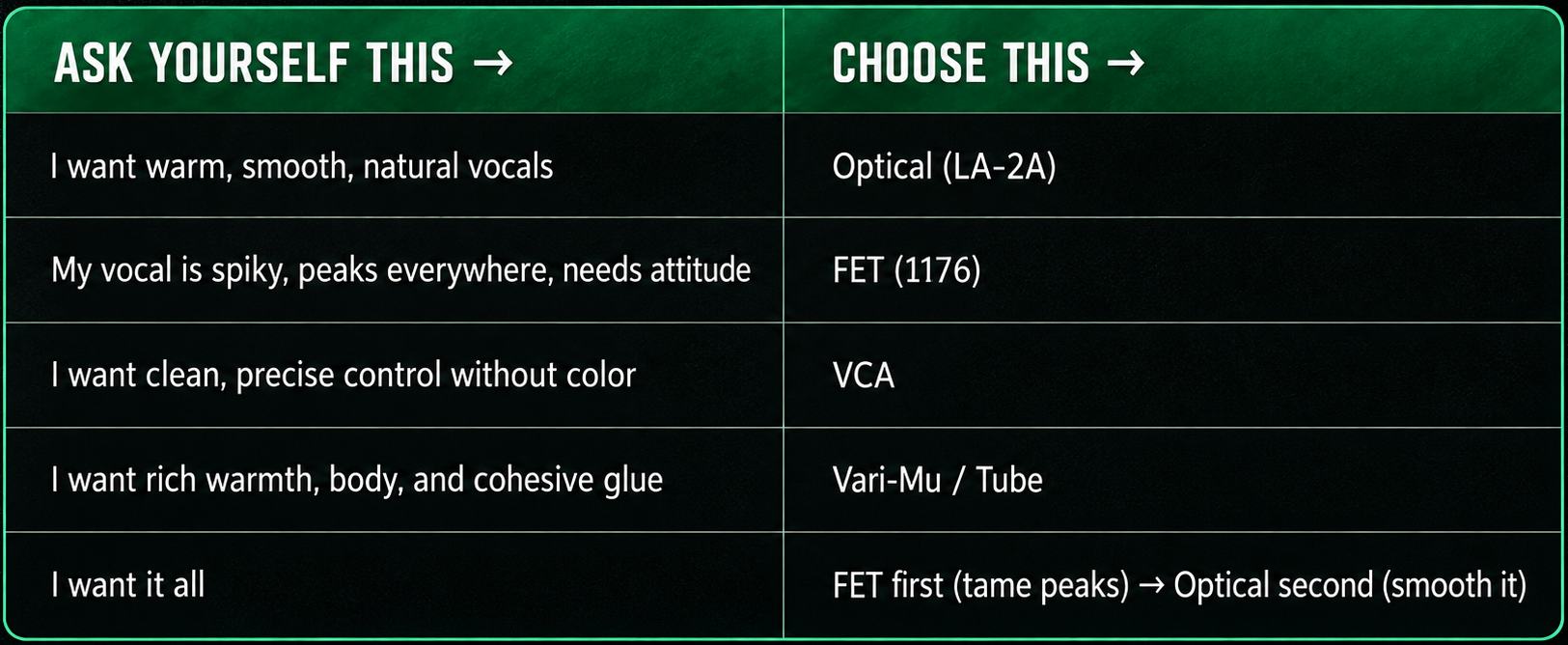
You need peak control and attitude — the vocal should feel confident and upfront. Often used first in a chain to tame spikes, followed by an opto for smoothing.

Classic example: SSL G-Series, dbx 160,
How it works:
Voltage-controlled amplifier — ultra-clean, precise, fully adjustable. No inherent coloration.
Speed:
Fully adjustable — fast or slow on demand.
Vocal character:
Transparent, clinical, clean. Does exactly what you tell it without adding flavor.
Best for:
Vocal buses, backing vocal stacks, genres where you want control without altering tone. Modern pop, EDM, spoken word.
Why choose it:
You need precision and consistency, not vintage warmth. When the vocal already sounds great and just needs disciplined leveling.

Classic example: Fairchild 670, Manley Vari-Mu
How it works:
Vacuum tubes change their compression ratio naturally as the signal gets louder. Soft-knee by design.
Speed:
Slow, gentle, organic.
Vocal character:
Rich, three-dimensional, "expensive." Adds harmonic depth and glues the vocal together. Feels like a cohesive performance.
Best for:
Lead vocals that need luxurious warmth and cohesion, vocal stacks, mastering.
Why choose it:
You want that "record album" richness — compression that feels like it belongs to the vocal, not added on top.
Part 3: Quick Comparison Table
Part 4: Genre-Specific Vocal Compression Settings
Part 5: Advanced — Serial & Parallel Compression
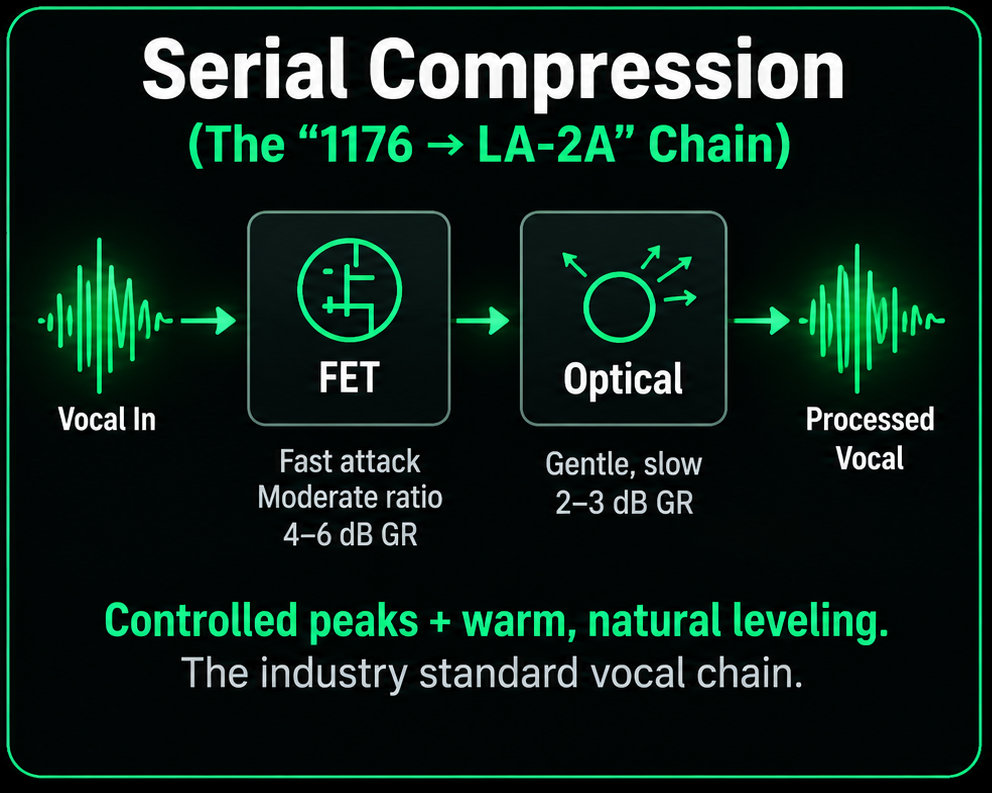
Use two compressors in sequence, each doing what they do best:
- First (FET): Fast attack, moderate ratio → catches sharp peaks (4–6 dB GR)
- Second (Optical): Gentle, slow → smooths overall level (2–3 dB GR)
Result: Controlled peaks + warm, natural leveling. The industry standard vocal chain.
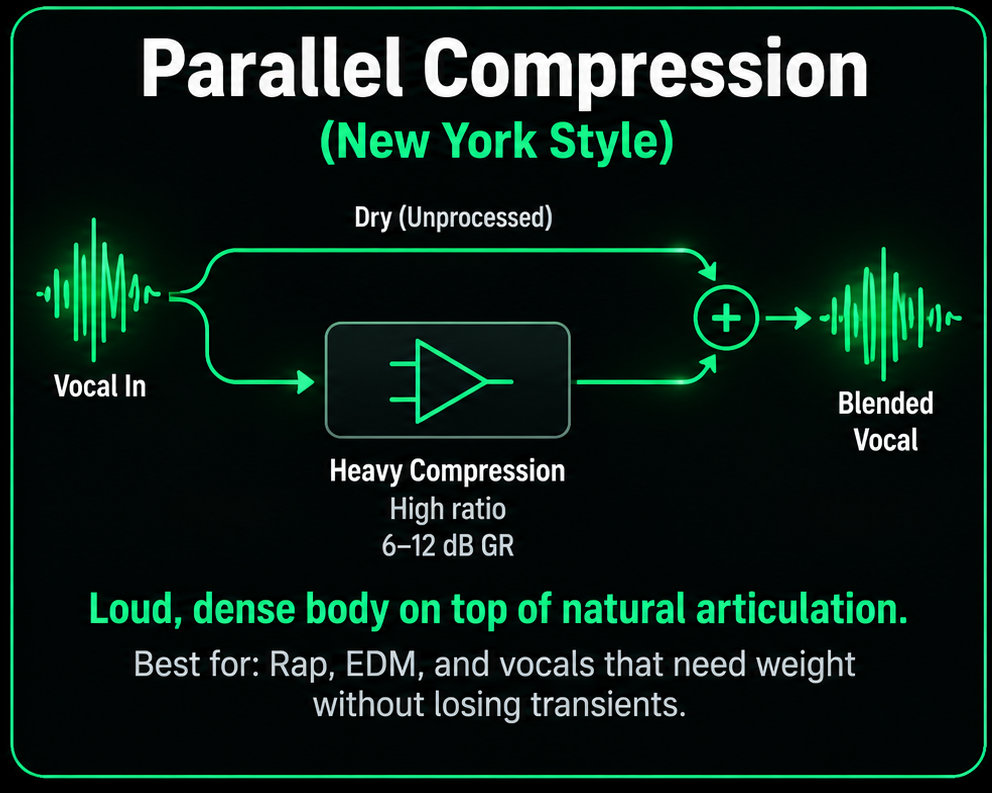
Use a compressor in parallel with the dry signal:
- Keep the dry vocal path untouched.
- Send a copy to a heavily compressed path (high ratio, 6–12 dB GR).
- Blend them together — loud, dense body on top of natural articulation.
Best for: Rap, EDM, and vocals that need weight without losing transients.
Summary
Vocal compression evens out the volume of a vocal performance by automatically reducing the loudest peaks and boosting quieter parts, so every word sits at a consistent level. It tames sudden shouts or breathy whispers, stops the voice from clipping or distorting, and helps the vocal cut clearly through the instrumental mix without getting lost. Used gently, it adds warmth and polish; too much can sound flat and lose natural emotion.
Head of Sales
CEDAR Audio Ltd
07 Sep 2026